

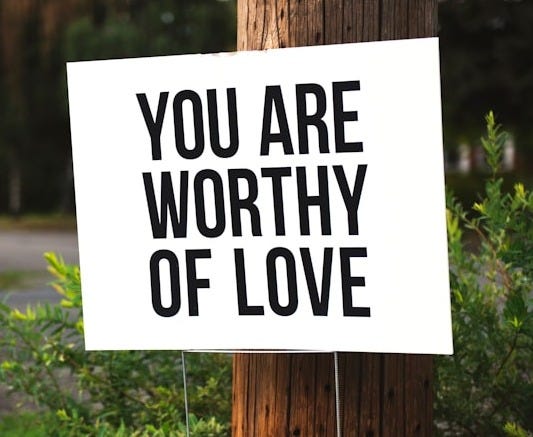
After my husband, Dan, died, my self-worth - the deep, internal, and unconditional belief in myself that I was valuable, worthy of love, and deserving of respect, regardless of my achievements faltered. I was no longer a mother raising children, a wife and partner, a teacher, or even a caregiver. Now, what did I have to offer?
There are many ways to describe how we feel and think about ourselves. While they seem the same, each is a distinct perspective with unique meanings, findings, and purposes. There is self-esteem, self-value, self-worth, self-perception, and self-respect, to name a few. When my self-worth wavered, I wasn’t
Treating myself with kindness and respect.
Feeling confident in my ability to handle challenges.
Valuing myself enough to leave unhealthy situations.
Celebrating my efforts, not just the outcomes.
Experts say we experience low self-worth for various reasons.
Unhealthy childhood environments, abuse, bullying, neglect, or life stressors such as job loss or relationship issues.
Significant life changes, such as retirement, the loss of loved ones, declining physical health, diminished independence, and ageism in society, can challenge our sense of self-worth and purpose, making us feel that our value is diminished.
Moving from peak midlife confidence to navigating new realities, societal stereotypes, and reduced status can affect our self-perception.
It seems that those three reasons collided, leading me to doubt myself. I was bullied as a child, and there were numerous losses throughout the years: jobs, pets, and family members. My husband struggled with dementia before he died from COVID; then I was on my own for the first time in my life.
They further explain that low self-worth can lead to negative self-talk, perfectionism, people-pleasing, and a sense of inadequacy or unworthiness. It may even increase the risk of depression, anxiety, and poor health.
What helps is realizing that self-worth isn’t about proving ourselves or meeting the expectations of others. It’s not about self-esteem either, which has to do with how we feel about what we do or did. It’s really about a deep, stable, and internal belief in who we are and in our inherent value and right to be loved and respected, regardless of our accomplishments or external validation.
As life changes, roles, losses, and limitations quietly redefine how we see ourselves, when that happens, we must claim - or reclaim - our self-worth by choosing to honor our experiences, strengths, and mistakes.
The good news: there are steps we can take to reconnect with our values and protect them going forward. I found these six worthwhile.
Many people tie self-worth to productivity, roles, or usefulness. When those change, their worth feels threatened.
Practice: Write two lists.
Roles we’ve had, like daughter, parent, spouse, teacher, and caregiver.
Qualities that may define us, like kindness, resilience, honesty, curiosity, and compassion.
Notice which list feels more permanent. Our self-worth lives in the second list.
Thoughts similar to “I’m not useful anymore” or “I don’t matter like I used to” often go unchallenged.
Practice: When a self-critical thought appears, ask ourselves:
Is this a fact—or a belief?
Would I say this to someone I love?
Contribution doesn’t have to look like it once did. Presence, listening, wisdom, encouragement, and lived experience matter.
Practice: Each day, we can ask ourselves questions such as these.
Where did I make a difference—no matter how small?
What choice today honors my worth?”
Contribution isn’t measured by output; it’s measured by impact.
Self-worth weakens when we tolerate disrespect, overextend ourselves, or ignore our needs.
Practice: Identify one personal boundary we need to enforce to protect ourselves. It could be
Saying no without explanation.
Asking for help without apology.
These boundaries aren’t selfish—they’re self-respecting.
Harsh self-judgments are a significant threat to self-worth, especially during aging-related changes.
Practice: Once a day, offer ourselves a compassionate statement. For example, “I’m doing my best” or “This is difficult, but I’m making progress.”
Self-worth grows in kindness, not criticism.
Experience carries value. Strength is often forged quietly.
Practice: List five things we’ve lived through that required courage or endurance.
Post the list on the refrigerator or bathroom mirror.
Reread the list when doubts appear.
We’re not defined by what we’ve lost—but by what we’ve endured and moved on from.
So, I’m in the process of reclaiming my self-worth - having it in place seems essential for anyone wishing to age well.
I’d love it if you could let others know about the newsletter. I want to share lessons I’ve learned over the years of life and caregiving with as many people as possible, and, more than anything, I want to continue expanding our community of readers desiring to age well.
So, please forward this email to a friend and invite them to join us. They can subscribe here:
Dr. Janice Walton is a psychologist, a widow, a mother, a grandmother, a great-grandmother, and a writer. She has written over 350 articles for Substack since January 2021 and is writing a book based on them, which will be published soon.
As life changes, roles, losses, and limitations quietly redefine how we see ourselves, when that happens, we must claim - or reclaim - our self-worth by choosing to honor our experiences, strengths, and mistakes.
Worthwhile points here! Sometimes we forget to recognize ourselves as valuable.